After the region, the processing method is the biggest influence on how an Ethiopian coffee tastes. It also affects consistency, grading and when the coffee is ready to ship. For many buyers, the choice between washed and natural matters as much as the choice between Yirgacheffe and Guji. Here is how the two methods work, and how to choose.
The short answer:
- Washed coffee has the fruit removed before drying. It tastes cleaner, brighter and more floral, and tends to be more consistent from lot to lot.
- Natural coffee dries inside the whole cherry. It tastes fruitier, sweeter and heavier, with more variation between lots.
- Washed coffees are usually graded, sampled and shipped earlier in the season; naturals follow.
- Both can be excellent. Choose washed for clarity and consistency, natural for fruit and body, and judge every lot on its sample.
How is washed Ethiopian coffee made?
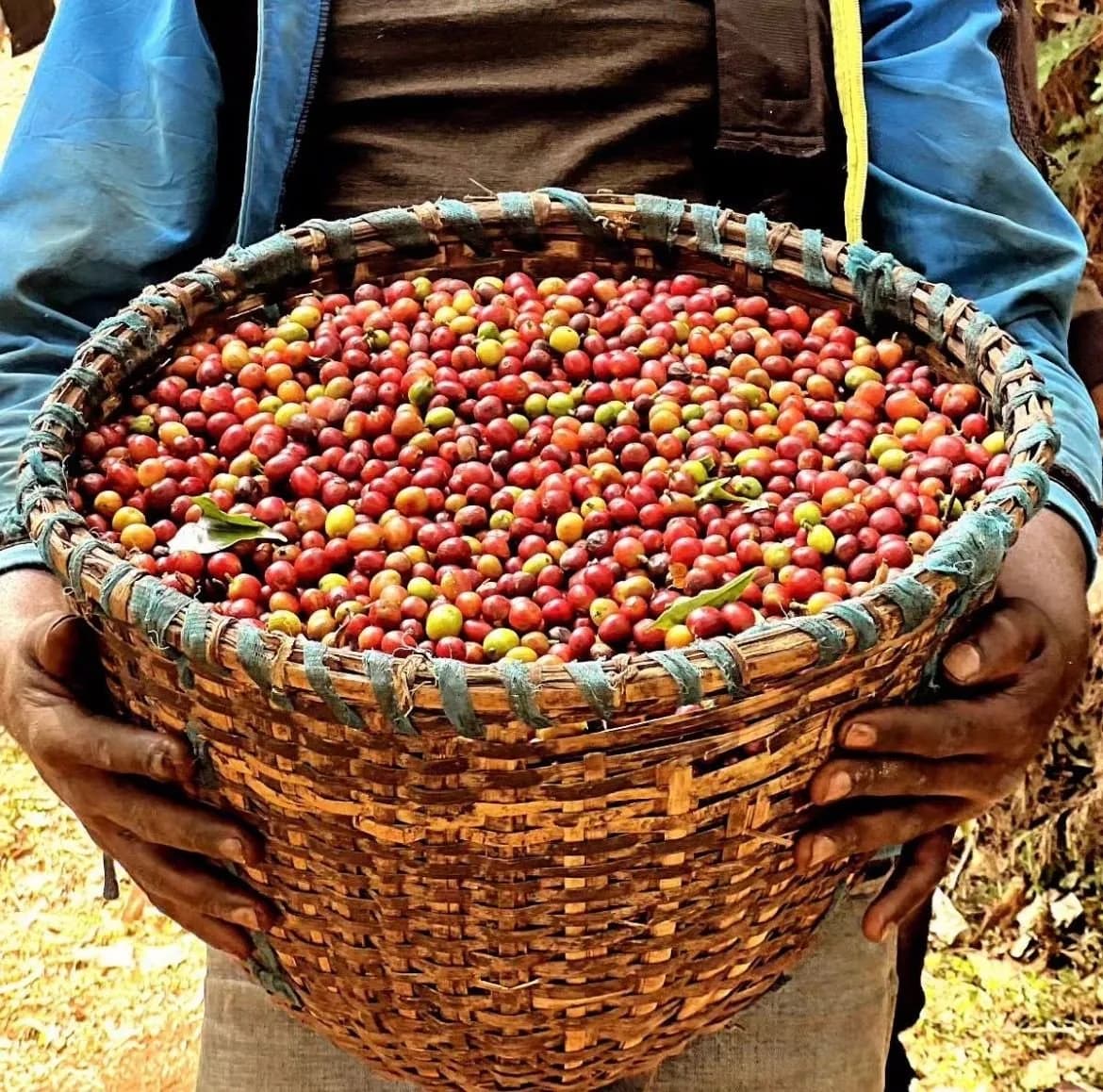
Farmers deliver ripe cherry to a washing station, usually on the day it is picked. There the cherry is sorted, then pulped to remove the skin and most of the fruit. The beans, still covered in sticky mucilage, ferment in water tanks for a day or more until the mucilage loosens. They are washed clean in channels, often with further sorting by density, and then dried as parchment on raised beds, usually for one to two weeks depending on the weather.
Most of Ethiopia’s washed coffee comes from the south, around Yirgacheffe, Gedeb, Sidama and Guji, and from Limu in the west.
How is natural Ethiopian coffee made?
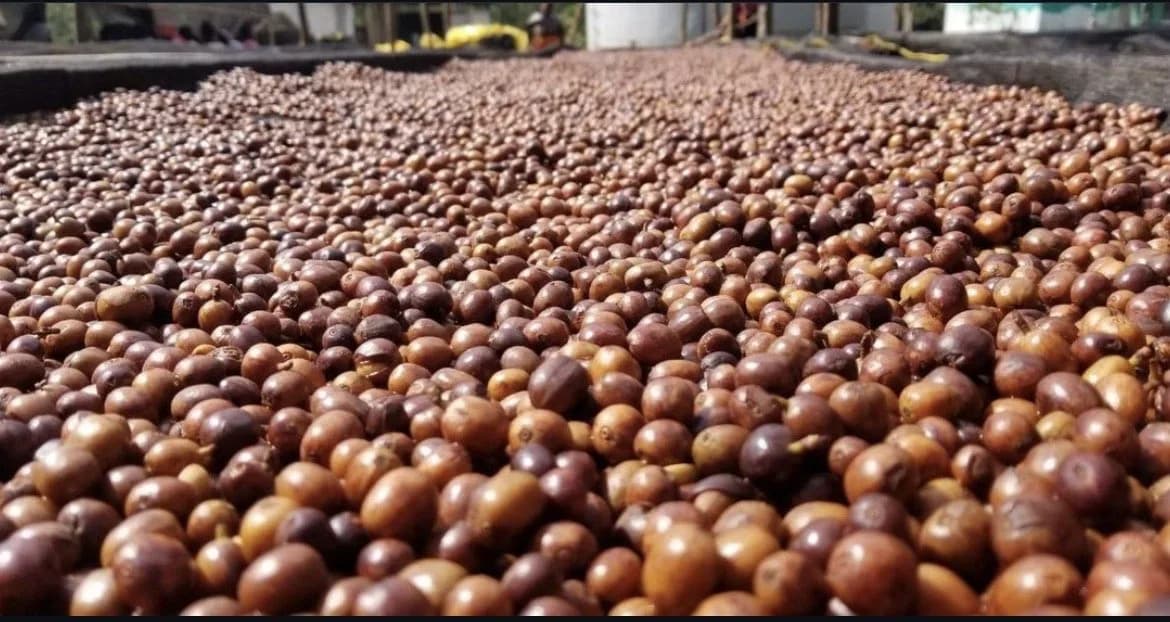
Natural, or sun-dried, coffee is the traditional Ethiopian method. The whole cherry is spread on raised beds and dried in the sun, turned regularly so it dries evenly, for several weeks until the fruit is hard and dark. The dried cherry is then hulled to remove the dried fruit and parchment in one step.
Because the bean dries in contact with the fruit, some of its sugars and aromatics carry through into the cup. Careful drying is everything: cherries that dry unevenly or too slowly can pick up fermented or musty flavours.
How do washed and natural coffees taste?
Washed | Natural | |
|---|---|---|
Typical cup | Clean, bright, floral, citrus, tea-like | Fruity (blueberry, strawberry, tropical), sweet, winey |
Body | Lighter, silky | Heavier, syrupy |
Acidity | Pronounced and crisp | Softer, rounder |
Consistency | Higher, lot to lot | More variable; sorting and drying make the difference |
Common grades | Grade 1 and 2 are widely available | Many excellent lots are Grade 3; Grade 1 naturals are premium |
Timing | Ready and shipped earlier in the season | Ready later, as drying takes longer |
What about honey, anaerobic and other methods?
Some Ethiopian producers now make honey-processed, anaerobic and other experimental lots. They can be striking, but they are made in small volumes and vary from season to season. Treat them as special releases, and ask what is available when you plan your buying.
Which process should you choose?
- For a delicate, aromatic single origin: washed, particularly from Yirgacheffe or Gedeb.
- For a fruit-forward coffee that customers remember: natural, particularly from Guji or Yirgacheffe.
- For espresso: both work. Washed coffees bring clarity and acidity; naturals bring sweetness and body. Many roasters use a natural for fruit in a blend.
- For consistency across the year: washed coffees are easier to repeat; with naturals, ask for lot details and approve a pre-shipment sample.
- For blends at a sharp price: commercial naturals from the west, Grades 3 to 5.
Why naturals need extra care when you buy
Most complaints about Ethiopian naturals trace back to drying or storage: over-fermented, musty or faded flavours that the offer sample did not show. Three habits help:
- Cup the offer sample and a pre-shipment sample from the actual lot you are buying.
- Ask about packaging. Hermetic liners such as GrainPro inside the export bags help keep moisture stable in transit and storage.
- Cup again on arrival, and roast naturals soon enough that you enjoy them at their best.
How we handle processing
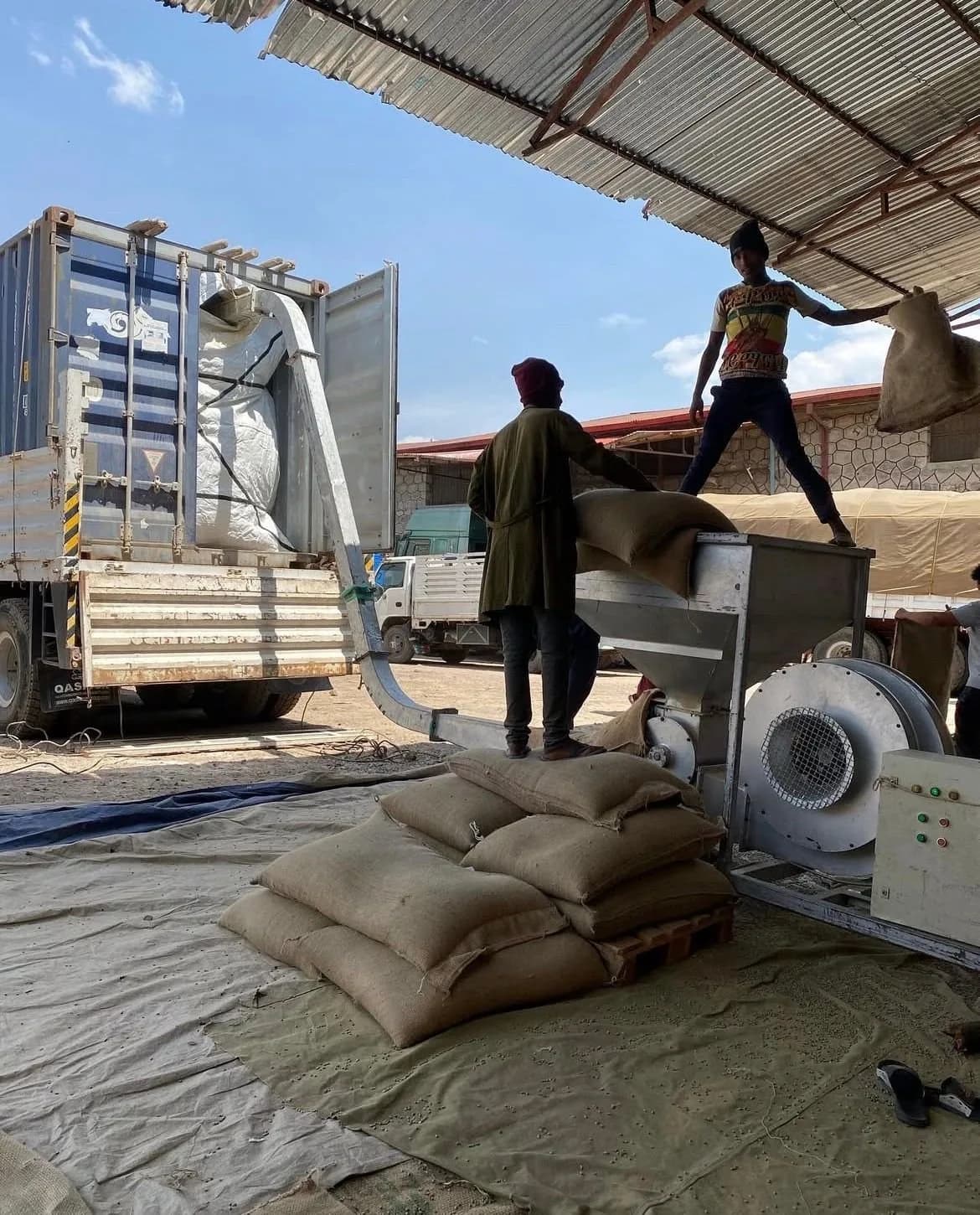
We buy directly from farmers and washing stations and handle processing and export preparation ourselves, from drying to hulling, sorting and grading. We offer both washed and natural lots, mostly Grade 1 and 2 from Yirgacheffe, Gedeb, Sidama, Guji, Limu and Jimma, with Grades 3 to 5 for blends. For each coffee you get the process, lot details and a sample where available. GrainPro liners are available on request. Tell us what you are looking for, or see how buying from us works.
Frequently asked questions
Is washed or natural Ethiopian coffee better?
Neither is better in general. Washed coffees are cleaner, brighter and more consistent; naturals are fruitier, sweeter and heavier. The right choice depends on your customers, your roast style and how much variation you can accept.
Why is Ethiopian natural coffee so fruity?
The bean dries inside the whole cherry for several weeks, so sugars and aromatic compounds from the fruit influence its flavour. Careful sun drying on raised beds brings out berry and tropical fruit notes.
Which ships first, washed or natural?
Washed coffees are usually ready, graded and shipped first, because parchment dries faster than whole cherry. Naturals typically follow a few weeks later. Plan your buying calendar accordingly.
Are naturals lower quality than washed coffees?
No. Naturals are harder to prepare consistently, so more of them end up in lower grades, but a carefully dried natural can be among the most exciting coffees Ethiopia produces.
Can I get both processes from the same washing station?
Often, yes. Many washing stations produce both washed and natural coffee from the same area, which is a good way to compare the effect of processing on similar coffees.