Every bag of coffee that leaves Ethiopia carries a grade. It appears on offer lists, contracts and sample labels, usually in a form like “Yirgacheffe Grade 1 washed” or “Guji G3 natural”. Buyers who are new to Ethiopia often read the grade as a flavour promise. It isn’t. This guide explains what an Ethiopian grade does tell you, what it doesn’t, and how to use it when you buy.
The short answer:
- Grades 1–5 are common offer-list categories, not an exhaustive statement of export eligibility. Confirm the classification and applicable current rules for the actual lot.
- Physical inspection considers defects and preparation; sensory assessment considers the cup. Current numerical ECTA weighting has not been verified here. Request the assessment method, version, date, grader and lot-specific report instead of assuming fixed percentages.
- Grades 1 and 2 are the usual specialty grades. Grade 3 can reach specialty quality, especially in naturals. Grades 4 and 5 are commercial coffees for blends and volume.
- Q1 and Q2 may appear alongside an export grade. Their definitions and numerical thresholds must be checked against the applicable assessment document; they are not automatically interchangeable with an SCA sensory score. Ask for the sample reference and report, then cup a representative sample yourself.
- A grade tells you how clean and well prepared a coffee is. It does not tell you what it tastes like. Two Grade 1 lots from different regions can taste nothing alike.
Who grades Ethiopian coffee, and when?
Ethiopian coffee exports are regulated. Before a lot can be shipped, it is inspected and graded by ECTA’s quality laboratories. Samples are drawn from the lot, the green coffee is examined, and it is roasted and cupped by trained cuppers. The result is recorded against the lot, together with its origin and processing method.
This happens at export, after the coffee has been dried, hulled, sorted and prepared. That matters for buyers: the grade describes the coffee as it was prepared for export, not the cherry at the farm, and not the coffee after months in a warehouse abroad.
How is the grade calculated?
The score has two parts.
Part | Weight | What is assessed |
|---|---|---|
Physical (green coffee) | — | Defects such as black, sour, broken or insect-damaged beans; for washed coffee also size and shape, colour and smell; for naturals mainly defects and colour |
Cup (roasted and tasted) | — | Cleanliness of the cup, acidity, body and flavour |
Physical inspection considers defects and preparation; sensory assessment considers the cup. Current numerical ECTA weighting has not been verified here. Request the assessment method, version, date, grader and lot-specific report instead of assuming fixed percentages.
What do Grades 1 to 5 mean in practice?
Grade | Typical use | What to expect |
|---|---|---|
Grade 1 | Specialty | The fewest defects and the top cup marks in Ethiopia’s grading. Carefully sorted, usually from well-run washing stations or farms |
Grade 2 | Specialty | Very few defects and a clean cup. For many roasters, the best balance of quality and price |
Grade 3 | Specialty or commercial | Can reach specialty quality, particularly naturals. Otherwise a good commercial coffee |
Grade 4 | Commercial | Sound everyday coffee for blends and larger volumes |
Grade 5 | Commercial | Commercial coffee for blends and volume |
Grades 1–5 are common offer-list categories, not an exhaustive statement of export eligibility. Confirm the classification and applicable current rules for the actual lot.
Why naturals often sit a grade lower
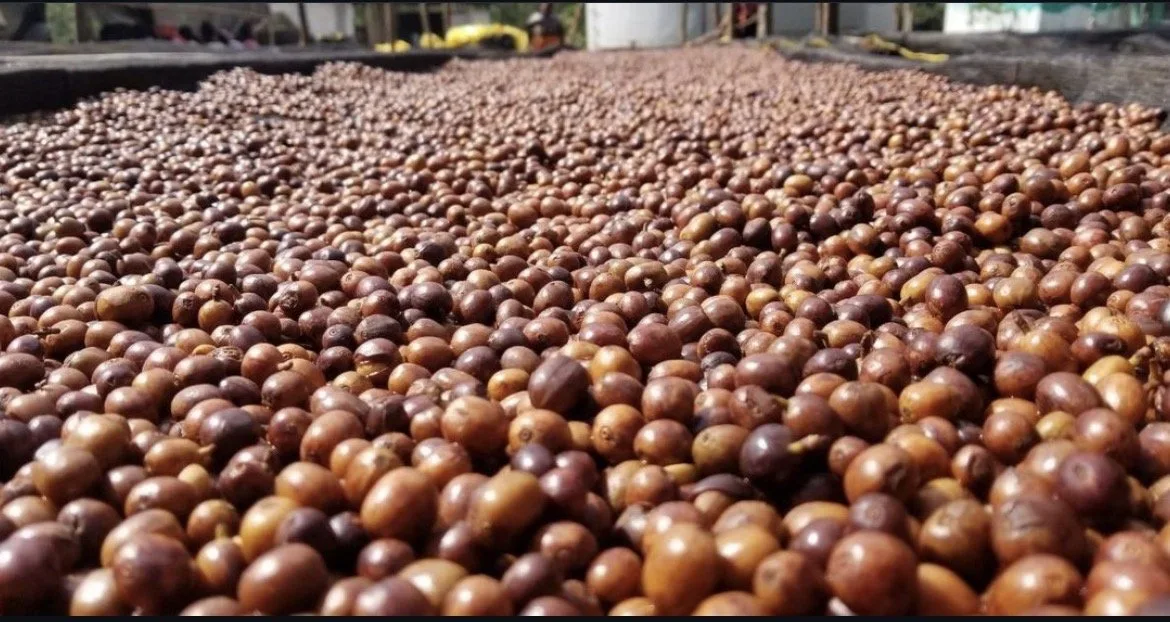
Natural coffees dry inside the whole cherry, which makes sorting harder and leaves more room for uneven drying and defects. For that reason, excellent naturals are often traded as Grade 3, and a natural Grade 1 is a genuinely well-prepared lot. When you compare prices, compare naturals with naturals and washed with washed.
What are Q1 and Q2?
Q1 and Q2 may appear alongside an export grade. Their definitions and numerical thresholds must be checked against the applicable assessment document; they are not automatically interchangeable with an SCA sensory score. Ask for the sample reference and report, then cup a representative sample yourself.
How to read an Ethiopian coffee name
Offer lists usually follow the same order: region, grade, process, sometimes followed by a washing station or farm name and a crop year.
- Yirgacheffe Grade 1 washed, Gedeb, 2025/26 crop – a washed coffee from the Gedeb area of Yirgacheffe, graded 1.
- Guji G3 natural – a natural coffee from the Guji zone, graded 3.
- Jimma G5 natural – a commercial natural from western Ethiopia, typical for blends.
The region part follows Ethiopia’s official coffee types, which are broad. “Sidama” or “Guji” covers many districts and thousands of farms, so two lots with the same name can differ a lot. That is why the washing station, farm and lot details matter more than the headline.
How should you use grades when buying?
Use the grade as a filter, not a verdict.
- Start with your use. A single-origin filter coffee usually points to Grade 1 or 2. An espresso blend component or a house coffee may be well served by Grade 3 or 4 at a better price.
- Put a minimum in your brief. “Grade 2 or better, washed, floral, for filter” is a far better starting point than “Ethiopian specialty”.
- Ask for the lot details. Region, washing station or farm, process, crop year and lot number. A seller who cannot give you these for a specific lot is selling a label.
- Judge the sample. Roast and cup it against your own standards. The grade told you it is clean; only the sample tells you whether it fits.
- Compare like with like. Washed with washed, natural with natural, same crop year.
How we work with grades
We source Ethiopian green coffee to match professional buyers’ requirements. We focus on Grade 1 and 2 washed and natural lots from Yirgacheffe, Gedeb, Sidama, Guji, Limu and Jimma, and supply Grades 3 to 5 for blends and larger orders. With every coffee we propose, you get its region, process, grade, crop year and lot details, and a sample where available, so you can judge the coffee rather than the label. See our coffees for the regions and processes we supply, or send us your brief.
Frequently asked questions
Is Grade 1 always better than Grade 2?
Not for every purpose. Grade 1 has fewer defects and scored higher at export, but a characterful Grade 2 can suit your customers better than a quiet Grade 1. For many roasters, Grade 2 is the best balance of quality and price. Decide on the sample.
What is the difference between Grade 1 and Q1?
Q1 and Q2 may appear alongside an export grade. Their definitions and numerical thresholds must be checked against the applicable assessment document; they are not automatically interchangeable with an SCA sensory score. Ask for the sample reference and report, then cup a representative sample yourself.
Which Ethiopian grade is best for espresso blends?
It depends on the role of the coffee in the blend. Grade 2 and Grade 3 naturals are popular for fruit and body; Grade 4 can work as a volume component. Tell us the blend’s target profile and price range, and we’ll suggest where to start.
Can a coffee’s quality change after it has been graded?
Yes. The grade reflects the coffee when it was prepared for export. Moisture, packaging, transit and storage all affect how it arrives and ages. That is why hermetic liners such as GrainPro, good storage and cupping on arrival matter.
Do natural coffees reach Grade 1?
Yes, but less often than washed coffees, because naturals are harder to sort. Many excellent naturals are sold as Grade 3, and a well-prepared natural Grade 1 is usually a premium lot.